Port authority
Quebec cruise port guide
Ross Gaudreault Terminal at Pointe-à-Carcy, walking to UNESCO Old Quebec, funicular access, and how cruise passengers plan a port day.
Ross Gaudreault Cruise Terminal and Pointe-à-Carcy
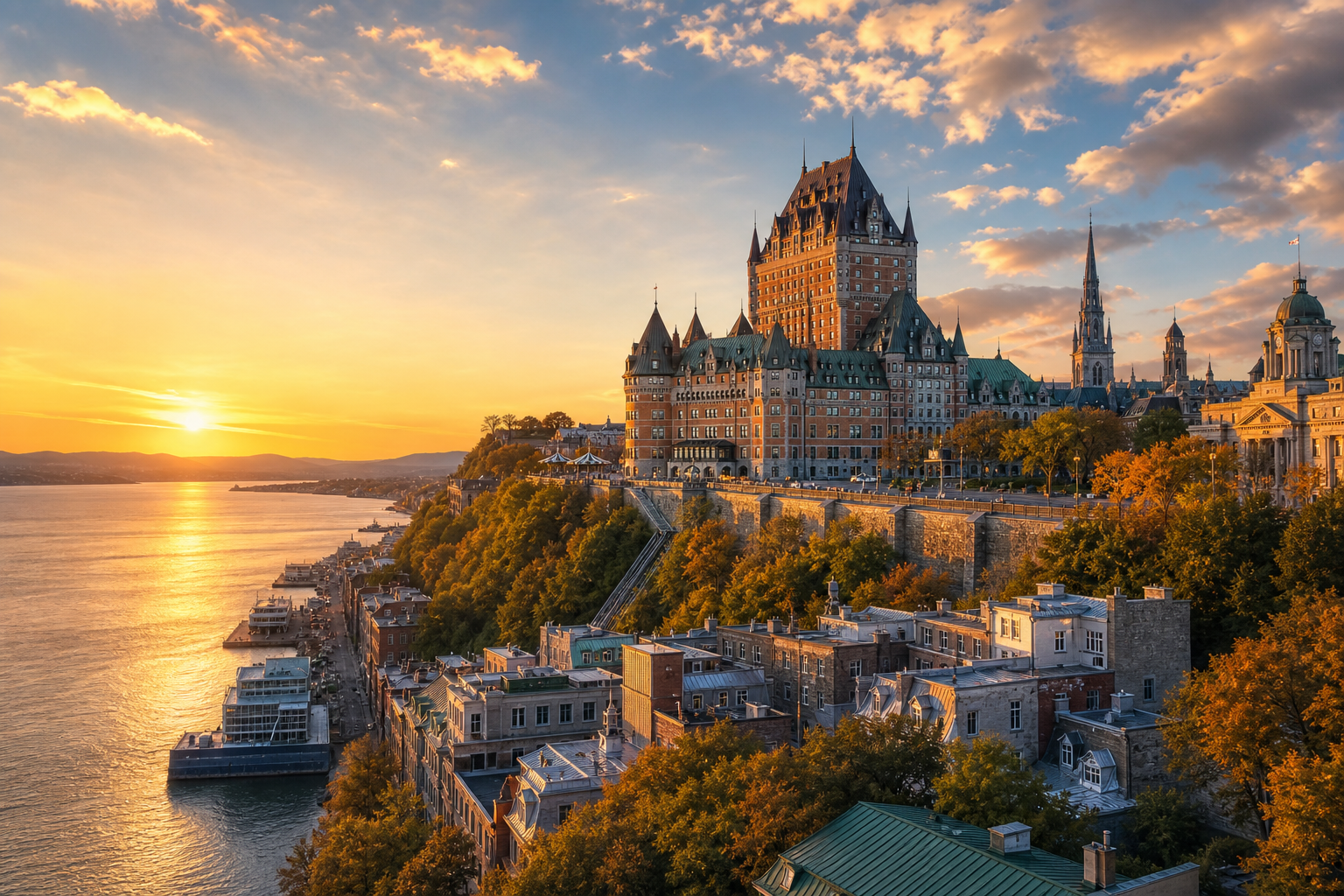
Location:Cruise ships dock at the Ross Gaudreault Cruise Terminal in the Pointe-à-Carcy district, on the St. Lawrence riverfront at the foot of Old Quebec's cliffs. The terminal sits within the UNESCO World Heritage zone — not across an industrial harbour like many North American ports.
Terminal layout: Facilities include customs and immigration halls, restrooms, and taxi stands outside the terminal building. Dining and shopping inside are limited — passengers typically walk to Petit-Champlain cafés or bring snacks for short port days. Signage directs toward Dufferin Terrace and the Old Quebec historic core.
Distance to highlights:Dufferin Terrace and the Château Frontenac sit roughly 800 metres uphill — 5–15 minutes on foot depending on your route and mobility. Place Royale and Petit-Champlain in Lower Town are 10–15 minutes from Upper Town via stairs or funicular. Montmorency Falls, Île d'Orléans, and Sainte-Anne-de-Beaupré require coach transfer — not walkable on a port day.
Pointe-à-Carcy context: The district includes the Musée de la civilisation, the Old Port market area, and riverfront paths. Many passengers combine a short St. Lawrence stroll with an Old Quebec walking tour on the same port day.
Walking from the cruise terminal to Old Quebec
Quebec City rewards walkers more than almost any other major cruise port in Canada. Ross Gaudreault Terminal sits at the edge of the historic district rather than across a highway — ramparts, church spires, and French-language signage begin within minutes of disembarkation.
Typical route to Upper Town: Exit the terminal toward the cliff, follow signs to Dufferin Terrace via Rue Dalhousie or the Breakneck Stairs area. The path involves moderate uphill walking — wear supportive shoes on cobblestones.
Typical route to Lower Town: Place Royale and Petit-Champlain sit at river level near the terminal. Rue du Petit-Champlain offers artisan shops and bistros without climbing to Upper Town first.
Realistic walking radius:Within 20 minutes on foot you can reach Dufferin Terrace, the citadel ramparts viewpoint, Place Royale, and dozens of galleries and cafés. Montmorency Falls, Île d'Orléans, and Sainte-Anne-de-Beaupré require transport — see our Montmorency Falls and Île d'Orléans excursion pages.
For honest DIY advice, read can you explore Quebec without an excursion and our flagship Old Quebec walking tour page.
Upper Town vs Lower Town
Old Quebec divides into two distinct zones connected by stairs, paths, and the funicular. Understanding the split helps you plan a logical route without backtracking uphill repeatedly.
Upper Town (Haute-Ville): The fortified cliff-top city — Château Frontenac, Dufferin Terrace, citadel ramparts, Plains of Abraham overlook, and Upper Town boutiques. This is where most first-time visitors photograph the skyline and walk the walls.
Lower Town (Basse-Ville):The riverfront colonial core — Place Royale where Samuel de Champlain founded the city, Petit-Champlain's narrow lanes, the Breakneck Stairs, and the cruise terminal zone. Lower Town feels more intimate and artisan-focused.
Planning tip: Start Upper Town for panoramic views, descend to Lower Town for lunch in Petit-Champlain, then return via funicular before all-aboard. Reversing the order means climbing stairs when tired.
Funicular, hills, and accessibility
The Old Quebec Funicular (Funiculaire du Vieux-Québec) connects Petit-Champlain in Lower Town to Dufferin Terrace in Upper Town in about two minutes. Queues form on peak summer and fall foliage call days — budget 15–20 minutes wait or use the stairs instead.
Breakneck Stairs (Escalier Casse-Cou): Historic wooden stairs linking Lower and Upper Town — steep but scenic. Not suitable for limited mobility or wheeled devices.
Accessibility reality: Old Quebec cobblestones and hills challenge wheelchairs and knee issues. Coach tours and private excursions can modify routes to reduce stairs. See our walking vs coach tour comparison if mobility is a concern.
| Mode | Typical time to Old Quebec core | Notes |
|---|---|---|
| Walking | 5–15 min to Upper Town | Free; cobblestones and hills; best first choice |
| Funicular | 2 min ride; queues in peak season | Links Lower and Upper Town |
| Taxi / rideshare | 5–10 min to districts | Useful for countryside or mobility needs |
| Shore excursion coach | Included in tour | Pier pickup; cruise-timed return |
| Public bus (RTC) | 10–20 min with routes | Possible but adds timing stress on port days |
Independent exploration vs booking excursions
Quebec City is genuinely walkable from the cruise terminal — independent exploration of Old Quebec works well on 4–6 hour calls without a booked tour. Countryside destinations (Montmorency Falls, Île d'Orléans, Sainte-Anne-de-Beaupré) require coach or taxi coordination that organised excursions handle more reliably.
When to book: Reserve excursions before your cruise if you want Montmorency Falls, island tastings, or Beaupré Coast basilica visits — popular fall foliage dates sell out. Old Quebec walking tours can often be booked closer to port day, but peak-season guides fill early.
When to walk independently: Short port calls, repeat visitors who know the layout, or passengers who prefer café-hopping and photography at their own pace. Read our full independent exploration guide for honest trade-offs.
French, English, and local etiquette
Quebec City is the capital of Québec and the heartland of French North America. Bill 101 established French as the primary language of public life, yet tourism, hospitality, and Old Quebec business operate comfortably in both French and English.
Practical tips:Greet shop staff with "bonjour" (hello) and thank them with "merci." Menus often appear in French first — staff will switch to English when asked. This small effort reflects respect for Québécois identity and usually improves service.
Weather and what to wear
Quebec City's continental climate brings hot summers, cold winters, and spectacular fall foliage on St. Lawrence cruises. Spring calls (May–June) and fall calls (September–October) often bring crisp mornings and mild afternoons — layers are essential.
Summer calls (June–August) can push 28°C (82°F) with humidity, while winter calls (November–March) require heavy coats, hats, and traction-friendly footwear on icy cobblestones. St. Lawrence river breezes cool the waterfront even on warm days.
- Pack a compact rain jacket year-round
- Wear comfortable walking shoes — cobblestones punish thin soles
- Sunglasses and sunscreen for exposed Dufferin Terrace walks
- Light fleece or windbreaker even on sunny autumn days
- Fall foliage calls (late September–mid-October) peak for colour tours
Tipping and currency
Canada uses Canadian dollars (CAD). Credit and contactless payment are standard at restaurants, museums, and shops. Keep small bills for market stalls, street performers, and coat checks.
Tipping norms: Restaurants expect 15–18% on sit-down meals (tip is not included in the bill). Bar service $1–2 per drink or 15%. Taxi and rideshare 10–15%. Tour guides $5–10 CAD per person on shared tours, higher for private guides.
International visitors should notify their bank before travel to avoid card blocks. ATM fees apply at airport and downtown machines — withdraw once rather than repeatedly.
Best first-time visitor plan
If this is your first Quebec City port call with 6–8 hours ashore, this sequence delivers maximum value with manageable return risk:
- Walk from terminal to Dufferin Terrace and Château Frontenac (30–45 min)
- Book an Old Quebec walking tour or city highlights tour for structured history (2.5–5 hours)
- Lunch in Petit-Champlain — allow 45–60 minutes
- Independent shopping or photography before returning via funicular
- Build 30–45 minutes before all-aboard at Ross Gaudreault Terminal
With 8+ hours, add Montmorency Falls or Quebec food tour tastings. See one day in Quebec for time-bucketed itineraries.
Best excursions for cruise passengers
Match your port hours to excursion type rather than overbooking:
- 4–5 hours: Old Quebec walking tour or Quebec food tour
- 6 hours: City highlights tour or Montmorency Falls excursion
- 8+ hours: Montmorency & Île d'Orléans combo, Beaupré Coast & Sainte-Anne-de-Beaupré, or private excursion
Compare ranked options in our best Quebec shore excursions guide or use the cruise planner.
Return-to-ship confidence
HighQuebec City returns are generally reliable when you stay in Old Quebec — Ross Gaudreault Terminal is minutes from major sights. Build 30–45 minutes before all-aboard even on organised tours. Highway traffic on Route 440 to Montmorency Falls and Route 368 to Île d'Orléans can delay coach returns. Walking back from Dufferin Terrace is predictable — factor extra time if you venture to the Beaupré Coast or full-day countryside combos.
Organised shore excursions from reputable operators are structured around cruise schedules. Confirm terminal pickup and drop-off when you enquire.
Frequently asked questions
Where do cruise ships dock in Quebec City?
Most large ships use the Ross Gaudreault Cruise Terminal at Pointe-à-Carcy, on the Lower Town riverfront near Old Quebec. Some smaller vessels may use adjacent berths along the St. Lawrence — confirm your ship's terminal assignment before planning walks.
Can you walk from the Quebec City cruise terminal to Old Quebec?
Yes — Upper Town and Dufferin Terrace are roughly 5–15 minutes on foot from Ross Gaudreault Terminal. Place Royale and Petit-Champlain in Lower Town are another 10–15 minutes downhill via stairs, the funicular, or Rue du Petit-Champlain.
What is the difference between Upper Town and Lower Town?
Upper Town (Haute-Ville) sits on the cliff above the St. Lawrence — Château Frontenac, ramparts, and Dufferin Terrace. Lower Town (Basse-Ville) is the riverfront district — Place Royale, Petit-Champlain, and the cruise terminal zone. The funicular and Breakneck Stairs connect them.
Do you need Canadian dollars in Quebec City?
Yes. Canada uses Canadian dollars (CAD). Credit and debit cards are widely accepted; carry some cash for market stalls, tips, and small vendors. U.S. dollars may be accepted at tourist spots but exchange rates are unfavourable.
Do you need to speak French in Quebec City?
No — tourism staff in Old Quebec usually speak English. Quebec City is more French-forward than Montréal, so greeting shop staff with bonjour and thanking them with merci is appreciated and often improves service.
What is the best shore excursion for first-time Quebec City visitors?
Old Quebec walking tour or city highlights tour — both cover UNESCO heritage streets, Château Frontenac views, and French North American history within standard 6–8 hour port windows. See our best excursions ranking for full comparison.
How early should cruise passengers return to the Quebec City terminal?
Build at least 30–45 minutes before your ship's all-aboard time. Highway traffic to Montmorency Falls or Île d'Orléans, funicular queues, and cobblestone hills can slow independent returns. Organised tours structure timing around pier deadlines.
Is Quebec City weather unpredictable for port days?
Quebec City has four distinct seasons. Fall foliage calls (September–October) bring crisp mornings; summer can be warm with St. Lawrence breezes; winter calls require heavy layers and traction footwear on icy cobblestones. Layers work year-round.
Plan your port day
- Quebec cruise port guide — terminal, walking, funicular, weather
- Quebec cruise planner — match excursions to your hours ashore
- One day in Quebec
- Explore without an excursion?
- Best Quebec shore excursions
- Montmorency vs Île d'Orléans
- Old Quebec walking tour — enquire about this tour
- Montmorency Falls excursion — enquire about this tour
- Île d'Orléans excursion — enquire about this tour
Need help choosing?
Tell us your ship, port hours, and interests — we'll suggest Quebec shore excursions that fit your schedule and return-to-ship window.